What they hired me to get
I started working as a freelance publicist in 2013, and the artists who came to me wanted one thing: an article.
They usually came with a recording or a concert and asked me to get a publication to write about it. They were right that they had a visibility problem. Their picture of the fix was simple. You hire a professional, the professional places an article, and the publication's readers do the rest.
When I looked closely at these projects, I kept finding the same gap. None of these artists had media of their own. They had a website, a bio, headshots, and perhaps some recordings, and all of it was static. That was normal at the time. Facebook's feed still favored people you knew, Instagram showed posts in chronological order until 2016, and the kind of feed that finds an audience for you based on interest did not yet exist in the form we know now.
Organizations were in the same position. One of my early clients was the Golandsky Institute, a small nonprofit devoted to the Taubman Approach to piano technique, which holds a summer symposium and festival at Princeton University. They hired me to promote the symposium, and the assumption was that articles would do it.
Two things stood out when I looked at what they had. They were not sending a regular newsletter, so we started sending one every week. They also had a large catalog of recorded training sessions that they sold one at a time, on DVD or as downloads. I led the work of moving that catalog behind one monthly subscription on their website, which amounted to building a small streaming service.
In July 2016 we also livestreamed lectures, master classes, and concerts from Princeton for free, three months after Facebook opened live video to all of its users. The streams drew more than 12,000 organic views in more than 50 countries in their first year, and in-person attendance at Princeton grew 34 percent over the five years I worked with the Institute. Putting the symposium online did not keep people home.
With artists, the same idea took a smaller form: a monthly newsletter, blog posts on their own websites, and excerpts on social media that sent people back to the full piece.
I would not recommend any of this as a method today. I mention it because of what it represented. At the time, artists and organizations did not think of visibility as something they could drive themselves. Visibility came from telling a third party about yourself and trusting that party's audience to do the rest.
I should be fair to the press, because I was the one getting those placements. The Golandsky Institute appeared in the New York Times, the Wall Street Journal, and the Philadelphia Inquirer. I also placed short listings in the Times section for upcoming events, which no longer exists. But arts coverage was already starting to shrink, and I concluded that placements alone would not be enough to grow anyone's reputation. That is where the idea behind this essay started for me: put more weight on the media you own than on the media you have to earn.
Since then, that idea has grown much larger than a newsletter and a blog. I now believe that every presenter, at every budget, has to operate as its own media company. To see why, it helps to look at what used to do that work for them.
What vanished
When I started, a concert had four ways to reach the people who might buy a ticket. A critic could review it. A radio host could play the recording and say the artist's name on air. The local paper could run a preview, a photo, or a listing. A record label could put the recording in front of the writers and programmers who decided what mattered. The presenter owned none of these channels, and all of them worked on the presenter's behalf.
I want to lay out what happened to each one, because I think the scale of it is still underestimated.
The critics
In 2015, WQXR reported that American newspapers employed about a dozen classical music critics, down from about 65 two decades earlier. The count has kept falling. In July 2025 the New York Times reassigned Zachary Woolfe, its chief classical music critic. In February 2026 the Washington Post let go of Michael Andor Brodeur, its classical music critic, in layoffs of about 300 people. In September 2026 Mark Swed retired from the Los Angeles Times after thirty years with no successor, and the paper's own headline called him the last full-time classical music critic at a major U.S. newspaper.
The review mattered because it helped people discover artists. A reader who had never heard of a pianist could find her because a writer the reader trusted covered her concert the next morning. When the critic left, that discovery did not move somewhere else.
The radio
In October 2010, NPR told the Federal Communications Commission that among the 505 public stations it surveyed, classical programming had fallen 20 percent since 2001 while news programming had grown 27 percent. Anyone who has worked with a presenter in a mid-sized American city knows how that felt. The station that used to announce your season and play your guest artist's recording the week of the concert moved to news. The audience still liked the music, but the channel that carried it had changed.
The local press
Northwestern's Medill School reports that about 3,500 American newspapers have vanished since 2005, almost 40 percent of the total. More than 270,000 newspaper jobs have disappeared, a loss of more than 75 percent. About 50 million Americans now live in a county with one local news source or none. Somewhere in those newsrooms were the people who took the listing, ran the photo, or wrote the preview, and that loss reaches presenters in every town.
The labels
This one is harder to measure, so I will describe it. A recording contract once brought money to make the record, a publicist to promote it, distribution to reach buyers and broadcasters, and the credibility of the label's name. Today artists and ensembles often fund the recording themselves, hire the publicist themselves, and release through a label whose main contribution is a logo and a place in a streaming catalog. The recording still exists, but much of the support around it does not.
What the four had in common
Critics, radio, local press, and labels together formed a public system for discovery that classical music never had to build or pay for. A presenter's job was to program well and send out the information. Other people, paid by other organizations, carried it to the audience and told the audience why it mattered.
Nothing public has replaced that system. Every marketing director in this field has inherited the gap, whether they run a department at a major orchestra or handle marketing alongside everything else at a small series.
The quiet substitution
Nobody announced the replacement. Attention moved a little each year, until the place where many people found out about music was a feed on their phone.
Pew Research Center finds that 59 percent of American adults get news from social media at least sometimes. In May 2026, Nielsen measured streaming at 48.6 percent of all television viewing in the United States, with YouTube alone at 13.8 percent, the largest share of any single service.
It is tempting to read these figures as being about someone else, because many orchestra patrons still read the paper and listen to the radio. Some of that is true. But the patron who found you through the Sunday arts section in 2005 is twenty years older now, and the person who would take that seat next has no Sunday arts section to find you in. She has a phone.
What the feed does
The critic, the radio host, and the arts page had something in common. Nobody asked them for the music. The review arrived with the morning paper, and the recording played between the news and the traffic report. That system put music in front of people who were not looking for it.
The feed does the same thing. It shows people things they did not search for, and it decides what to show next based on how people responded to what it showed before.
One example comes from my own work. In June 2022, an eighteen-year-old pianist named Yunchan Lim played Rachmaninoff's Third Concerto in the final round of the Van Cliburn International Piano Competition. The performance was streamed live and posted to YouTube, and by September 2025 that one video had reached 17 million views. Few of those viewers went looking for a Rachmaninoff concerto. The platform showed it to them because the people who started watching kept watching, so it showed it to more people.
The feed is not a critic. It has no taste, and it cannot explain why something matters. But it has taken over the part of the critic's role that helped strangers discover an artist, and nothing else now operates at that scale.
Why this is a distribution problem
When an institution sees that attention has moved, the first response is usually to improve production: hire a videographer, buy better cameras, make the trailer look like a film. That response assumes the audience left because the material was not polished enough.
In most cases the audience never saw the material. A beautiful five-minute film posted to an account that gives the platform little signal about who should see it will reach mostly the people who already follow that account. That is a distribution problem. By distribution I mean knowing how a platform decides what to show and building for that: how long a piece should run, how it should open, what the numbers say once it is out, and what to make next.
That skill is different from making the video, and in my experience almost no institution has it on staff, whatever its size. The old system handled distribution for free. The new one can carry the work farther than any critic could, but only if someone inside the institution understands how it works.
Every presenter is its own media company
Every presenter is now its own media company, whether or not it has chosen to be one.
I mean that as a description. The critic, the radio station, the arts page, and the label were all media companies. They produced work on a schedule, with a point of view, and carried it to an audience they understood. The presenter supplied the raw material: the concert, the artist, and the date. When those channels disappeared, their work did not move anywhere. The presenter is the only party left who can do it.
How this differs from a marketing department
Most institutions already have someone doing marketing, and that work still matters. I do not say this as a criticism of anyone in those jobs, because most of them inherited a structure built for the old system. But marketing and media are built to do different things.
A marketing department sells what the institution has already decided to present. Its calendar is the season calendar, and its unit of work is the campaign. It speaks when something is on sale and goes quiet when the hall is dark.
A media company holds an audience's attention over time and sells into that attention. It publishes every week, whether or not anything is on sale. Its unit of work is a piece that someone would choose to watch even if they never bought a ticket.
Four differences matter most in practice.
A media company publishes consistently. The feed judges a channel partly by whether it reliably produces things people stay for. An institution that publishes heavily in September and goes silent in February has to rebuild its momentum every time.
It works in several formats. The arts page ran reviews, previews, profiles, photos, and listings, and each one did something different. A media company does the same with performance excerpts, rehearsals, artists talking, archive material, and full concerts.
It has a point of view. Nobody read a critic who had no opinions. Every presenter has real taste in its building, and very little of it reaches the public. Most institutional posts say when and how much. They rarely say why this artist is worth hearing.
It treats distribution as a core skill. In a media company, distribution shapes what gets made, how long it runs, and how it opens. It is part of the planning, not a step that follows the finished piece.
Why this applies at every size
The largest institutions saw this early. The Metropolitan Opera's first Live in HD transmission, The Magic Flute, went to cinemas on December 30, 2006, and the Met says the series now reaches more than 70 countries. The Berliner Philharmoniker streamed the first live concert of its Digital Concert Hall on January 6, 2009. Both built their own channels and audiences instead of waiting for a broadcaster.
Those two institutions needed major investment to do it. Today any presenter with a camera and someone who understands the platforms can build a channel.
That is why I think this applies to a communications director at a major orchestra and to someone running a chamber music series on $500,000 a year. The first has more staff, more footage, and more approvals to work through. The second may be doing marketing alongside three other jobs. The job itself is the same: the presenter is now responsible for reaching the audience it used to reach through someone else.
The next section shows what that looked like at three different sizes.
Three campaigns
I worked on each of these campaigns directly. The numbers come from the campaign reports and case studies, and I am happy to share them.
The Cliburn, Fort Worth, 2022 and 2025
The Van Cliburn International Piano Competition asked us to grow webcast viewership for its 2022 competition. We worked on site for all three weeks, beside the webcast team. The webcast ran most of the day, and our job was to cut it into short pieces a stranger would stop for and then put those pieces in front of that stranger.
We published a high volume of video in many formats: a performer walking onstage, a single passage, a face at the end of a concerto, a full round. The organic videos that performed best became the paid ads that pointed to the webcast. Each day we read how the platforms had treated each piece and used that to decide what to cut next.
The webcast closed at 10 million views and reached 25 million in the weeks that followed, across 170 countries. That was five times the 2017 competition. Followers across platforms grew 141 percent.
The Cliburn engaged us again for 2025. That competition closed at 20 million views, double the 2022 closing figure, before any post-event viewing. Across the two cycles the webcast has passed 45 million views. The doubling is the result I care about most, because it shows that the audience built in the first cycle was still there when the second one began.
The Gilmore, Kalamazoo, 2026
The Gilmore Piano Festival engaged us for a five-month campaign, from January to May 2026, which is the shape most institutions need. We published artist spotlights during the ticket launch and then weekly videos through the spring. During that same stretch we banked 63 finished videos for the Festival itself. Over the 11 Festival days we published about ten videos a day: the 63 from the bank, plus 47 made from the previous night's footage, with next-day turnaround every day. Across the campaign we produced 177 short videos.
We also made a decision about paid media that I would repeat anywhere. On YouTube, we ran the full concert recordings as the ads, so every paid view landed on the Gilmore's own channel instead of on an ad that disappears when the campaign ends.
Organic social views passed 1 million. The Gilmore reported 443,889 livestream and on-demand views of its Festival concerts, with viewers in 33 countries, and eight concerts sold out. The two decisions that mattered most, the bank and the concert ads, were made well before the Festival opened.
Portland Piano International, 2023 to 2025
Portland is the smallest of the three and the most direct test, because it is a recital series measured in ticket buyers rather than views.
Portland had been a client for nearly a decade, and for most of those years the work was what most presenters still buy: email, print advertising, media relations, and static social posts. The programming was world-class and the audience was loyal, but growth had plateaued.
In the fall of 2023 we added video to that existing work: short artist spotlights and performance highlights, with the strongest organic pieces turned into targeted paid campaigns on Meta. It was the only significant change in the strategy.
Over two seasons, single-ticket buyers grew 50 percent and total paid attendance rose 22 percent. Single tickets went from 32 percent of paid seats to 40 percent, which means the audience itself was changing. Website sessions from social media rose 61 percent from 2024 to 2025.
The programming did not change. Who saw it did.
What the three have in common
These campaigns have little in common in scale. What they share is the order of operations. We decided on distribution first, and production served it. Output was constant rather than tied to a single push. The strongest organic pieces became the paid ads, so the ad spending backed work that had already proven itself. And in each case, what remained afterward (an archive, a channel, a larger group of ticket buyers) outlasted the event that produced it.
What this asks of an institution
When an institution asks me what this requires, the question underneath is usually about money. Money turns out to be the smaller part. The harder parts are a change in what the marketing function is for, a few decisions about who does what, and a willingness to show the music more freely than most institutions are used to.
A change in rhythm and control
Output becomes a standing function, like the box office, instead of a project attached to each concert. It runs in February, and it runs when nothing is on sale. At the Gilmore, the quiet months before the Festival were when most of its video inventory was built.
Control also has to move. Institutions have protected their brands by approving every image and caption, and that instinct is right for a season brochure. It does not work for daily publishing. During the Gilmore Festival, 47 videos were cut from the previous night's footage and posted the next day, which left no time for a committee. That worked because the standards had been agreed in January. The control moves earlier, to the decisions about what the institution is willing to show.
The artistic side also needs to be part of this. The hardest questions in this work are about what may be filmed, by whom, and when it may be shown, and those questions touch the institution's relationships with its artists and partners.
Footage comes first
Everything depends on footage, and footage depends on agreements the marketing department does not control: with artists and managers, with webcast or recording partners, and with the hall. In every campaign I have worked on, the ceiling was set by how much of the music we could show and how soon. That conversation belongs at the start of the season, because by the time the concert arrives it is too late to have it.
One person who can say yes
The campaigns that worked had one person on the institution's side who owned the relationship: someone who could get a camera into a rehearsal, clear a recording, settle a caption, and answer a question late at night during festival week. When that responsibility is spread across departments, the work slows to the pace of the slowest approval. At a large institution, this means naming one person. At a small one, that person probably already exists and needs the authority and the time.
How this works at a smaller size
I would not ask a chamber music series to publish ten videos a day. The Gilmore did that for eleven days during a festival. The same logic works at a smaller size. A small series can bank a few pieces before the season, publish on a steady weekly rhythm, film the concerts it already presents, and put a modest ad budget behind whatever is already working. Portland's results came from adding that kind of work to what it was already doing, without a film crew or a new department.
What it does not ask
None of this asks an institution to change what it presents. Portland did not change its programming, the Gilmore is still a piano festival, and the Cliburn is still a competition. It does ask the institution to make three decisions before the season starts: that distribution is a function it owns, who owns it, and what footage it can use. Once those are settled, production is the easiest part to buy.
Where this goes
This last section is a prediction, and it comes from one seat: a handful of rooms in Fort Worth, Kalamazoo, Portland, and New York since 2010. You will have your own view, and comparing the two is the reason I wrote this down.
What is not coming back
The infrastructure I described in section 2 is not returning. Medill counted 136 newspapers closing in the past year, more than two a week, and 250 more counties at high risk of becoming news deserts over the next decade. Mark Swed's chair at the Los Angeles Times has no named successor. So the next five years start from where we already are: fewer people whose job is to notice a concert, and more of the audience's day spent in a feed that responds only to what it is given.
The institutions that build this
I expect the gains to compound. The Cliburn is the clearest evidence, with a closing-day audience that doubled between 2022 and 2025 while the competition itself stayed the same size. I expect the same from any institution that keeps publishing between seasons, because each cycle starts from a higher place than the last.
I also expect the archive to become an institutional asset. The Gilmore's 2026 concert recordings drew nearly 199,000 views on its own YouTube channel during the campaign's reporting period, and they keep finding viewers after the musicians have gone home. A recording that used to sit in a closet now lives where strangers can find it. Over five years, an institution that records and publishes its concerts will own a library and a direct relationship with its audience, which no critic, station, or label ever gave it.
And I expect this work to show up in how institutions are organized. Someone will hold the title. Footage will be negotiated into artist and recording agreements at signing. The artistic side will have a seat in deciding what is shown.
The institutions that do not
I do not expect collapse, and the field has heard enough warnings of it. I expect narrowing. The audience that found these institutions through the arts page will keep renewing for a while and then stop, because nobody is replacing it. Each season's marketing will start again from zero. These institutions will not be doing anything wrong. They will be doing what used to work.
The gap will widen a little each year, and budget will not decide it. A small series with three years of steady publishing behind it will be in a better position than a large institution that starts over every season.
What I am less sure of
I do not know which platforms will matter in five years. I do not know whether the field will build its own publications again to replace the critics, though I hope it does. And I do not know how institutions will keep their artistic standards intact under a daily publishing rhythm. That is the question I would most like to hear answered by someone who has lived inside it longer than I have.
I wrote this to find out whether the picture holds outside the rooms I have been in.
Does this match what you see from your seat?
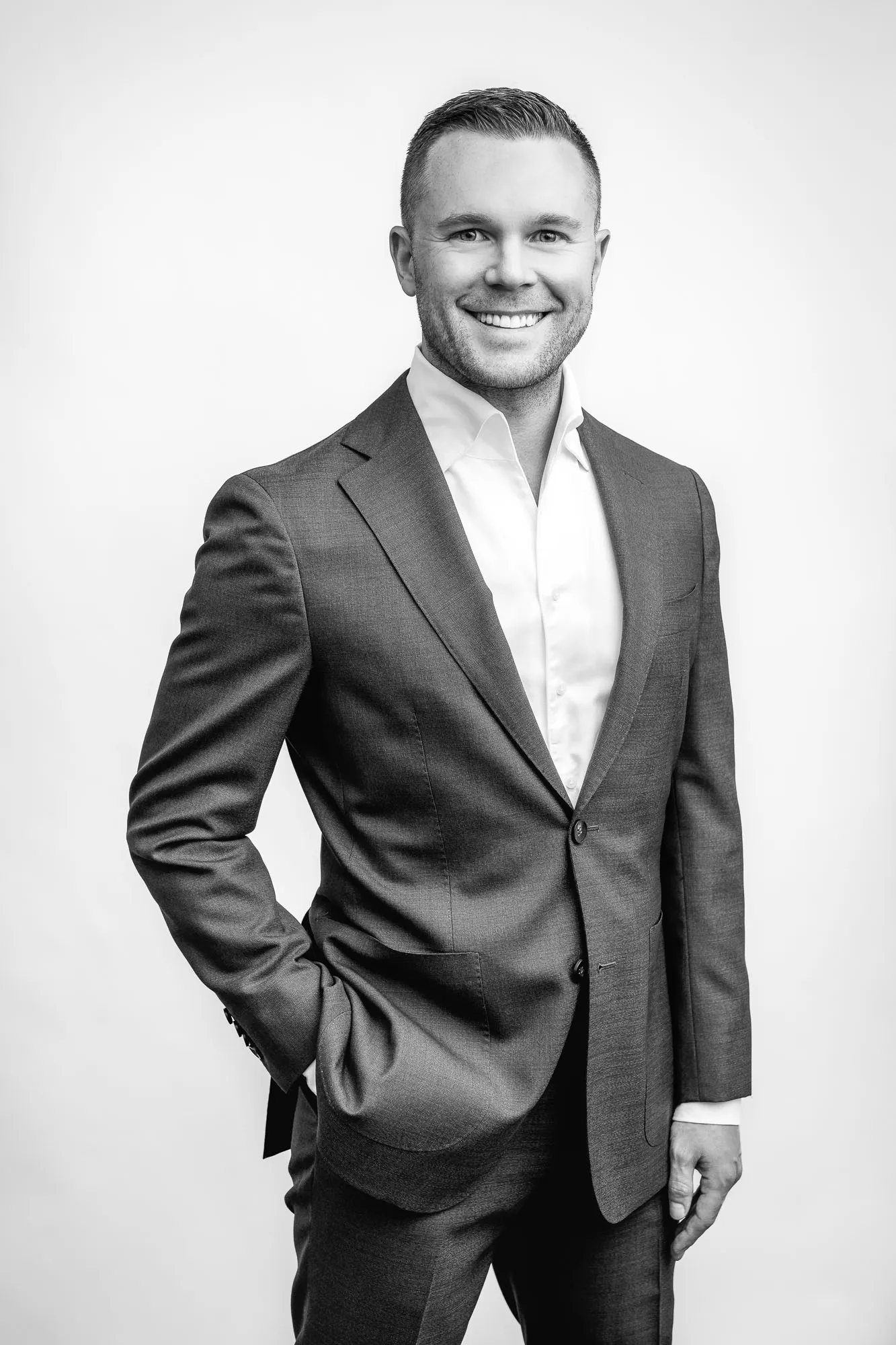
Jonathan Eifert is the founder of Gold Sound Media, a brand strategy consultancy advising classical musicians and performing arts institutions, and the creator of Classical Post, a video podcast on how classical musicians build careers, with more than 150 episodes. He is a classical pianist by training, a member of the Recording Academy, and serves on the board of MoCA\CT, where he chairs the performing arts advisory committee. He is based in New York.
Sources
- The Golandsky Institute case study and campaign records; Golandsky Institute live-streaming announcement, July 2016.
- The Next Web, "Facebook details story bumping and other News Feed algorithms," August 6, 2013; MacRumors, "Instagram Will Shift From Chronological to Algorithm-Based Feed," March 15, 2016; Horizont, "Facebook schaltet Live-Streams für alle frei," April 6, 2016.
- Naomi Lewin, "The disappearing classical-music newspaper critic?," WQXR, August 11, 2015.
- The Violin Channel, "New York Times Re-Assigns Classical Music Critic Zachary Woolfe to New Role," July 21, 2025.
- Slippedisc, "Washington Post sacks last music critic," February 5, 2026; The Violin Channel on the Washington Post layoffs, February 2026.
- Los Angeles Times, "The last full-time classical music critic at a major U.S. newspaper retires," September 25, 2026; The Violin Channel, "Celebrated Music Critic Mark Swed Retires," September 29, 2026.
- Radio Survivor, reporting NPR's October 2010 filing to the Federal Communications Commission, December 7, 2010.
- Medill School of Journalism, Northwestern University, "The State of Local News 2025," October 20, 2025; Nieman Lab coverage of the report, October 2025.
- Pew Research Center, "Social Media and News Fact Sheet," October 19, 2026.
- Nielsen, The Gauge, May 2026, as reported by MediaPost, July 28, 2026.
- Interlude, "The Seven Most Popular Piano Concertos on YouTube," September 8, 2025.
- Metropolitan Opera, "Sweet Fifteen," metopera.org; Berliner Philharmoniker, Digital Concert Hall concert archive.
- The Cliburn case study, 2022 and 2025; Jerome Weeks, "More Popular Than Game of Thrones: Fort Worth's Cliburn Competition Gets Millions of Views," KERA News, September 21, 2022; statement of Maggie Estes, Director of Communications and Digital Content, The Cliburn.
- "The Gilmore: Campaign Performance Report, 2026 Gilmore Piano Festival," May 2026; The Gilmore case study, October 2026.
- Portland Piano International case study: Sunday concert attendance, 2022–23 to 2024–25, and website sessions, 2024 and 2025.
- Jonathan Eifert, biographical details from jonathaneifert.com.